
"It Wasn't That Bad": Why You Minimize Childhood Trauma — and Why It Still Counts
Hey Friend! If you've ever started a sentence with "I don't want to be dramatic, but…" or "It wasn't that bad…" — this one is for you.
It's one of the most common things I hear from the adults I work with. They're capable, self-aware, often high-achieving. They can trace their anxiety, their overthinking, their trouble resting. And almost every time we get close to the root, the same sentence shows up: but it wasn't bad enough to call it trauma.
So let's talk about that sentence — where it comes from, why it's so convincing, and why the very belief that "it wasn't that bad" is often part of the wound itself.
Why "it wasn't that bad" feels so true
When you picture trauma, you probably picture something dramatic and obvious. A single terrible event. Visible danger. Something no one could argue with.
But a lot of trauma doesn't look like that. It looks like a childhood home where the temperature could change without warning, so you learned to read the room before you could read words. It looks like being praised for being "mature," "easy," and "low-maintenance" — which really meant not having needs. It looks like love that showed up only when a parent had the capacity for it, so you concluded love was something you had to earn.
There were no bruises to point to. On paper, things looked fine. And so you did the most natural thing in the world: you decided your pain didn't qualify.
This is what I explore in depth in Healing Through Understanding Family of Origin Trauma — the way the home you grew up in becomes the water you swim in, so normal you can't see it.
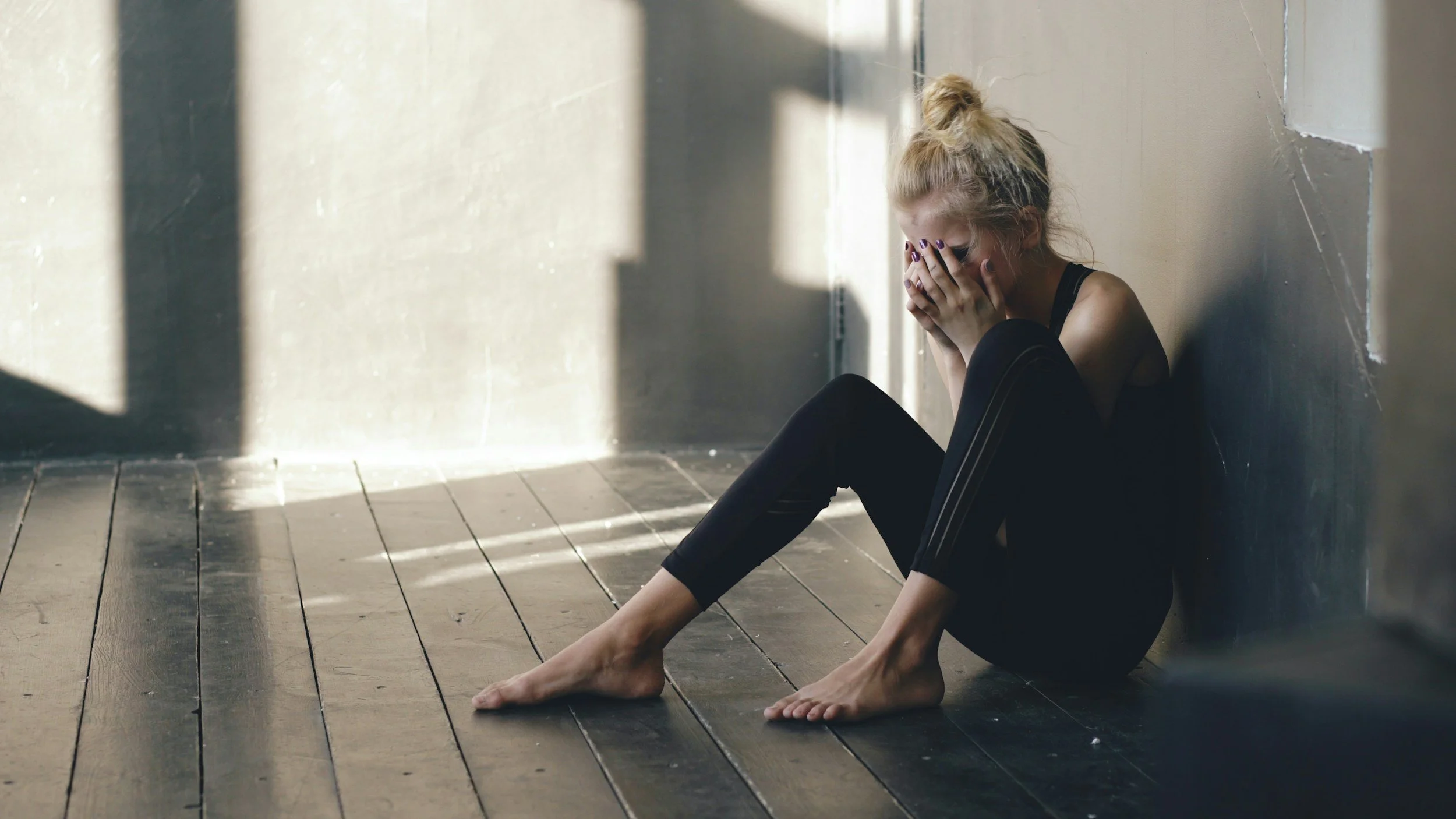
"Big-T" trauma vs. "little-t" trauma (and why the names are misleading)
Clinicians sometimes distinguish between "big-T" trauma (a clearly identifiable event — an accident, an assault, a disaster) and "little-t" trauma (ongoing, relational, harder to name — chronic criticism, emotional neglect, walking on eggshells).
Here's the problem with those labels: the word "little" makes you think it matters less. It doesn't. Repeated, low-grade relational stress — the kind that shaped your nervous system day after day for years — can leave deeper marks than a single dramatic event. This is often what people mean by complex trauma, or C-PTSD: trauma that comes not from one moment, but from a pattern.
Your nervous system doesn't keep score the way your conscious mind does. It doesn't ask, "Was that bad enough to count?" It simply learns what to expect — and then prepares you for more of it.
How minimized trauma shows up in adulthood
You might not connect your present-day struggles to your childhood at all, precisely because you've decided it "wasn't that bad." But the patterns tend to speak for themselves:
You flinch or shut down when someone raises their voice.
You over-apologize, even for things that aren't your fault.
You brace before you ask for anything — or you don't ask at all.
You're exhausted from anticipating everyone else's needs.
You struggle to rest, even when you finally have the chance.
You carry a quiet, persistent sense that something is wrong with you.
If that last one lands, you may find Challenging Negative Self-Beliefs: A Path to Self-Acceptance especially helpful — because so often, the belief "I'm too much" or "I'm not enough" was installed long before you had any say in it.
These patterns also tend to follow us into our closest relationships, shaping who we're drawn to and how safe we feel being honest. (If you've noticed this, The Role of Attachment Styles in Adult Relationships unpacks why.)
Why minimizing it was a survival skill — once
Here's the part I most want you to hear: minimizing your pain wasn't a flaw. It was smart.
When you're a child who depends on the very people who are hurting or neglecting you, you can't afford to fully register how bad it is. So your mind does something protective — it shrinks the pain down to a size you can survive. "It's fine. It's not a big deal. Other people have it worse." That belief kept you functional. It kept you attached. It got you through.
The trouble is that the skill outlived its usefulness. The thing that protected you at eight is now the thing keeping you from getting support at thirty-eight. "It wasn't that bad" stopped being protection and quietly became a locked door.
"Why can't I just get over it?"
Because it didn't just hurt you — it shaped you. You can't "get over" the water you grew up in any more than a fish can get over the ocean. It became part of how you see yourself, how you relate, what you expect from love.
That's not a reason for despair. It's a reason for self-compassion. You're not weak for still being affected. You're human, responding exactly the way a nervous system is designed to respond to years of not feeling safe.
And the same is true of the guilt you feel when you finally start setting limits with the people who shaped you. That flood of "I'm being mean" when you say no? That's old programming, not present-day truth. (More on that in The Power of Setting Boundaries in Relationships.)
It was real. It counted. And it can heal.
June is PTSD Awareness Month — and notably, women are about twice as likely as men to experience post-traumatic stress. Part of awareness is widening the picture of what trauma actually is, so the women quietly telling themselves "it wasn't bad enough" stop falling through the cracks.
You don't need a worse story to deserve support. If your body learned the world wasn't safe, that is reason enough to tend to it now. Healing isn't about proving your past was dramatic enough to qualify. It's about finally giving your nervous system the safety it never got — and learning, slowly, that you're allowed to put down the job of managing everyone and everything.
If this resonates, this is exactly the work I do with women across Michigan. You can learn more about therapy for attachment wounds and family-of-origin healing here — and when you're ready, I'd be honored to support you.
It was real. It counted. And you don't have to keep healing it alone. 🤍
Warmly,
Kymberly Kremnitzer, LMSW
The Rooted Therapist MI
The Rooted Therapist MI offers virtual, depth-oriented therapy for adults across Michigan healing from emotionally immature parents, narcissistic family dynamics, and the survival patterns that follow. Reach out to begin.